NAS Training Update Cape Town Oct/Nov 2011

South Africa’s underwater heritage is a finite resource that belongs to us all, and should be enjoyed and studied by anyone with an interest in it. However, it needs to be managed it in such a way that ensures it will be available for future generations. This means that sites need to be found, recorded, mapped and monitored, and protected from those pesky treasure hunters. With approximately 3 000 known shipwrecks along 3 000kms of coastline, this is quite a mammoth task. And it’s not just shipwrecks; there is maritime-related infrastructure, sacred lakes and a multitude of other forms of underwater heritage that fall under SAHRA’s mandate.

Now, Jon likes to be busy, but as omnipotence is a skill he has yet to master, he needs some help. By providing divers and non-divers who have an interest in their underwater cultural heritage with some basic training, we not only increase awareness of this resource, but also give individuals the knowledge and skills they need to get involved and assist us with successfully managing some of these sites.

Over two weekends (29 October; 5&6 November 2011), SAHRA’s MUCH Unit conducted training for 8 such individuals. Using the curriculum developed by the Nautical Archaeological Society (NAS) in the UK, the participants were introduced to various key concepts in underwater archaeology, including archaeological site types, archaeological dating methods, South African legislation regarding underwater heritage, searching for and then surveying a site, and conservation techniques. They were presented with South African case studies and encouraged to develop their own projects in collaboration with SAHRA. The participants practiced practical surveying skills, on land and underwater, and discovered the necessity of proper planning and team work when working underwater. The ladies also discovered the joys of being unable to talk underwater, as this was the only time that Alex was quiet.
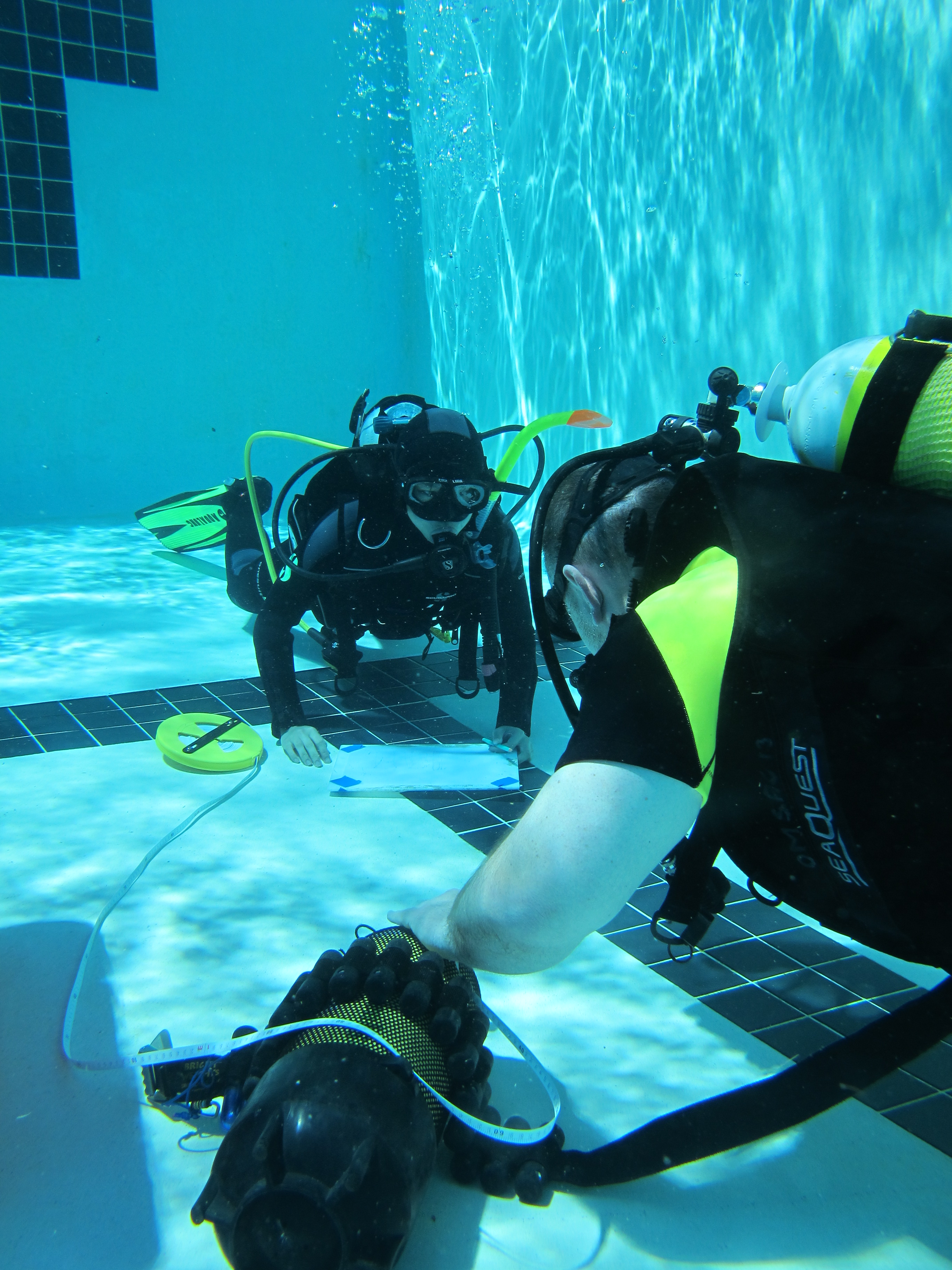
The NAS curriculum is divided into 5 parts, and the modules can be spread out to accommodate even the busiest individuals. This group completed the Introduction to Foreshore and Underwater Archaeology and Part 1 Certificate. The next step is to practice the skills they learned on a real site and create a site map and a site report for the Part 2 qualification.

A big thank you to Rochelle, Monica, Marianne, Feier, Paul, Alex, Sean and Justine for being such an interested, interactive and entertaining group. We look forward to continuing your training and working with you in the future. Last but not least, thank you to Heather for all her help!
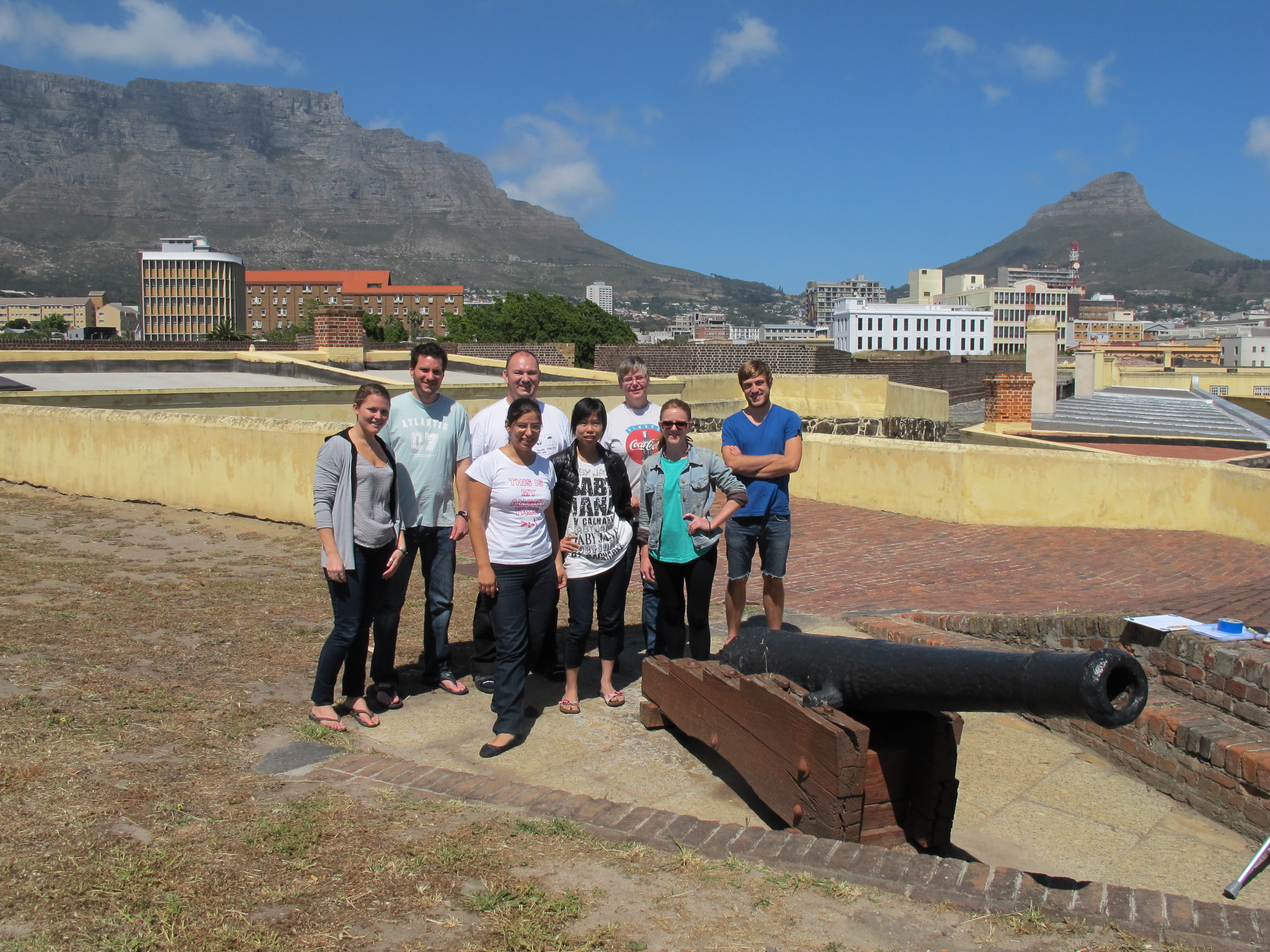
Heather, Jon, Rochelle, Alex, Monica, Marianne, Sophie and Sean
Announcement – SAHRA Field School 2012

THE SAHRA MARITIME AND UNDERWATER CULTURAL HERITAGE FIELD SCHOOL 2012

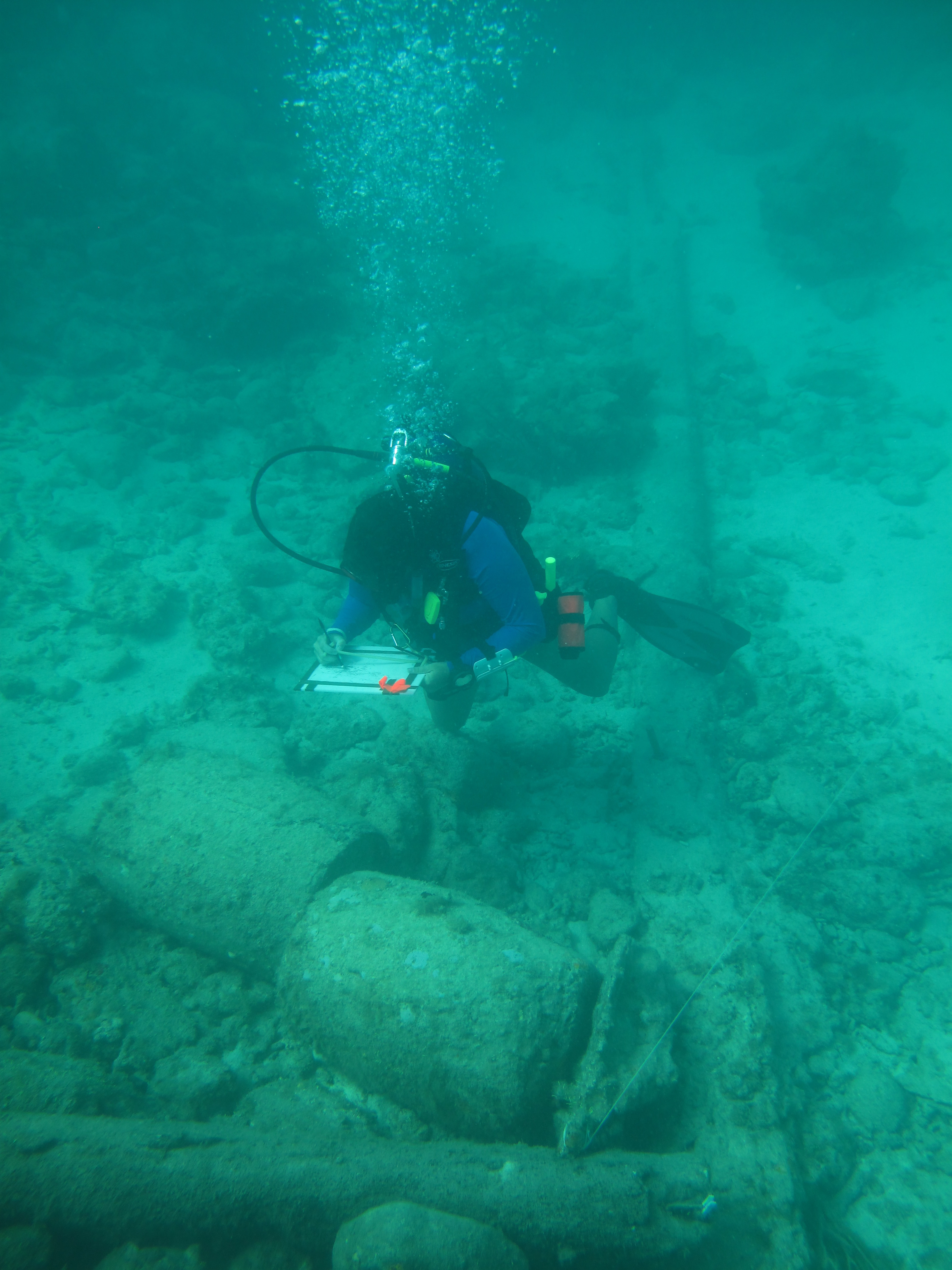
The South African Heritage Resources Agency will be hosting a Field School in maritime and underwater cultural heritage, better known as underwater archaeology. Together with the Robben Island Museum and Iziko Museums, the Centre for International Heritage Activities and the University of Leiden, the team will be investigating archaeological sites on Robben Island and the “Barrel Wreck” in Table Bay. This is an as-yet unidentified shipwreck which research indicates dates to the mid-nineteenth century.

ARE YOU STUDYING ARCHAEOLOGY / HISTORY / HERITAGE MANAGEMENT OR RELATED SUBJECTS?

ARE YOU INTERESTED IN THE MARITIME HERITAGE OF SOUTH AFRICA?

DO YOU WANT TO GAIN PRACTICAL EXPERIENCE IN ARCHAEOLOGICAL FIELD WORK – BOTH TERRESTRIAL AND UNDERWATER?

WOULD YOU LIKE TO BE PART OF AN INTERNATIONAL TEAM OF STUDENTS?

The course is designed for both divers and non-divers who want to gain experience in Maritime and Underwater Cultural Heritage. You will gain experience in various archaeological activities such as surveying methods, site reconnaissance, recording, drawing, mapping, position fixing, in-situ conservation, lab processing and artefact conservation. You will also attend lectures presented by internationally recognized specialists in heritage management, maritime archaeology, and conservation. Through archaeological investigation and archival research, you will learn about the history and culture of the colonial Cape and assist SAHRA and Robben Island in the management of some of South Africa’s unique heritage resources.

The Field School runs from January 16 – February 10 2012 and the team will be based on Robben Island. Accommodation and catering are provided at no cost to you. The Field School is split into modules to accommodate those of you who can’t be there for the duration.

For more information or to apply, please contact Sophie – swinton@wc.sahra.org.za

NAS Course Dates Announcement

SAHRA has announced dates for Nautical Archaeology Society Introduction and Part I courses. The Introduction course will take place on 29 October and the Part I course will be held on the 5th and 6th of November. Details will follow.

Bed Time Reading – Part II

As Europe struggled out of the feudal system that followed the sacking of Rome by the barbarians in  400 AD and into the renaissance, it looked east to satiate its re-awoken taste for exotic goods. But Europe had little direct access with India, China, Japan and the Spice Islands. Instead, traders in the Middle East controlled trade between East and West. In an effort to circumvent the Middle East and gain access to cheaper goods, European nations began searching for other safe, fast and cheap ways to acquire those trade items for which demand was growing. Attempts to gain control of the dangerous terrestrial trade routes had failed and so people looked to the sea and Europe entered its Age of Exploration. Ships were dispatched both east and west of Europe in an effort to reach the rich Spice Islands, porcelain markets, textile factories and other goods which European markets craved.

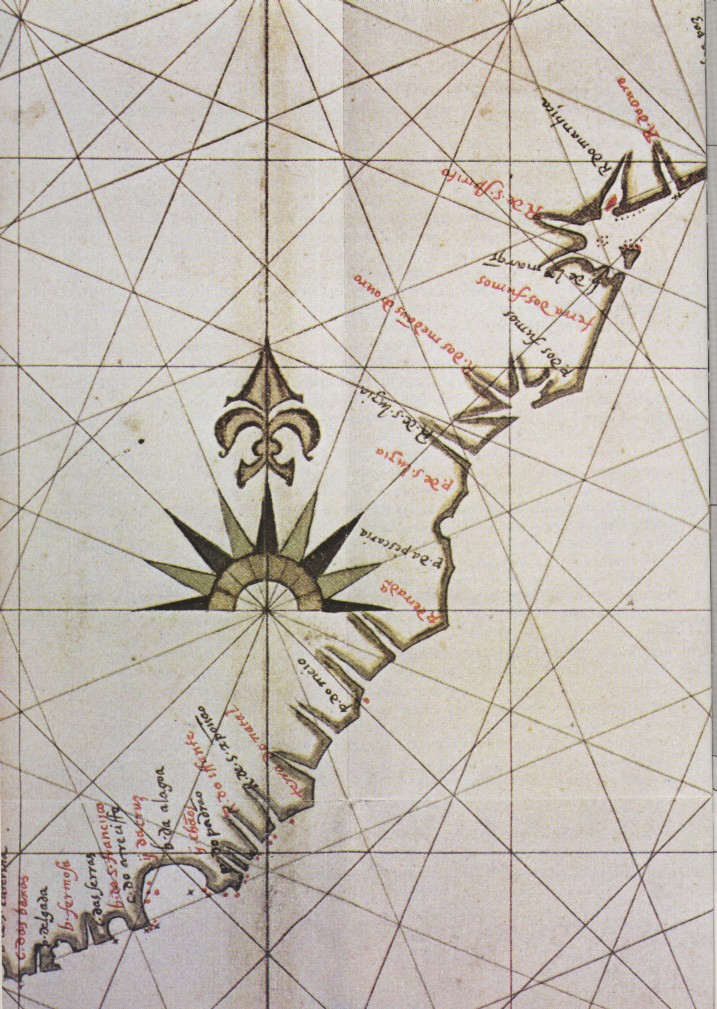
In the context of South Africa’s history, it is the voyages around the African continent that most influenced change. The exploratory voyages of Bartholomew Diaz  in 1489 and Vasco Da Gama in 1499, opened the way for a flood of seaborne trade that had profound consequences for South Africa, the African continent and the world in general. Diaz was the first European to round the southern tip of Africa in Portugals’ attempts discover an all sea route to the East. Evidence seems to suggest that he got as far as Mossel Bay before returning home. Da Gama followed soon after and continued across the India Ocean to the East in 1499. Portugal’s pioneering explorers gave her the edge in the race for eastern markets and she quickly became a major power in Europe. But others followed quickly as the rest of Europe realised the potential of direct trade with the East.

Bed Time Reading – Part I

SOUTH AFRICA’S MARITIME HISTORY

Over the past 500 years, the South African coast has seen the drama of shipwreck played out again and again. Rugged coastlines have swallowed up vessels straying too close to the shore and poor weather conditions have claimed ships even in the best condition. It is no co-incidence that the coast around the southern tip of Africa was known as the Cape of Storms. Continue reading

What is Underwater Heritage about?

The first response to me saying “I’m an underwater archaeologists” is usually: “Wow, that’s such a cool job!” Being socially inept, this statement is usually followed by an awkward silence while I struggle to think of something to say to keep the conversation going. Continue reading